
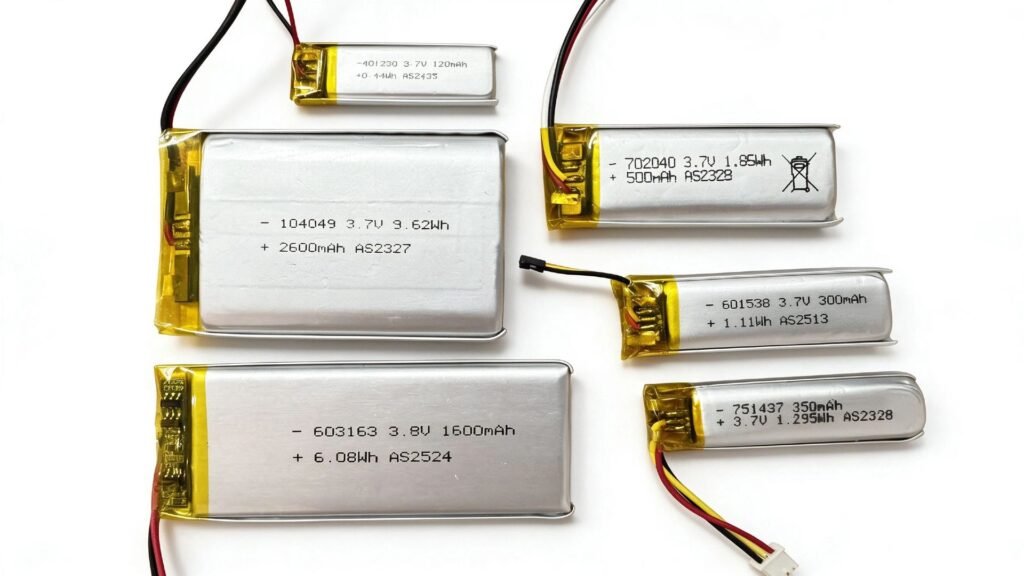
3.7V Lithium Polymer Battery: Complete Guide for OEM Buyers
Published by A&S Power | Battery Technology | OEM Sourcing Guide
Introduction
The 3.7V lithium polymer (Li-Po) battery is one of the most widely used rechargeable power sources in modern electronics. From wearable devices and TWS earbuds to medical sensors and IoT products, the 3.7V Li-Po cell offers the ideal balance of energy density, form factor flexibility, and safety.
At A&S Power, we specialize in manufacturing custom 3.7V lithium polymer batteries for OEM buyers worldwide. Whether you need a standard 120mAh cell for a smart ring or a high-capacity 10,000mAh pack for a portable device, we deliver tailored solutions that meet your exact specifications.
For a complete overview of our custom battery capabilities, see our Custom Lithium Polymer Battery – OEM/ODM Solutions guide. If you’re new to Li-Po technology, start with our Lipo Battery 101 guide.
What is a 3.7V Li-Polymer Battery?
A 3.7V lithium polymer battery is a rechargeable power source that uses a gel-like polymer electrolyte instead of the liquid electrolyte found in traditional cylindrical cells. This design allows for ultra-thin, lightweight, and flexible form factors — making it the ideal choice for compact, space-constrained devices.
Unlike rigid 18650 or prismatic cells, Li-Po pouch cells can be manufactured in custom shapes, thicknesses, and capacities to fit virtually any enclosure. This flexibility is why 3.7V Li-Po cells dominate the wearables, TWS earbuds, and medical device markets.
Key Characteristics
| Characteristic | Description |
|---|---|
| Nominal Voltage | 3.7V (standard single-cell configuration) |
| Full Charge Voltage | 4.2V (4.2V per cell) |
| Cutoff Voltage | 3.0V (do not discharge below) |
| Chemistry | Lithium polymer (LiCoO₂, NMC, or LFP variants) |
| Form Factor | Flexible pouch – can be shaped to fit any enclosure |
| Thickness | As low as 3.0mm |
| Capacity Range | 20mAh to 10,000mAh+ |
| Cycle Life | 300–500+ cycles to 80% capacity (up to 700+ with optimized design) |
| Safety | Built-in PCM protection (overcharge, over-discharge, short-circuit, overcurrent) |
| Certifications | UL, CE, RoHS, UN38.3, IEC62133 |
Why 3.7V Is the Industry Standard
The 3.7V nominal voltage is the standard for single-cell lithium polymer batteries because it offers the optimal balance of compatibility, energy density, and safety:
| Factor | Why 3.7V Matters |
|---|---|
| Compatibility | Most consumer electronics and IoT devices are designed to operate within the 3.0V–4.2V range, which matches a single Li-Po cell’s full discharge curve. |
| Energy Density | 3.7V cells offer the optimal balance of capacity and physical size — higher voltage would require multi-cell packs, increasing weight and complexity. |
| Safety | Single-cell configurations require simpler protection circuits (PCM only, no cell balancing needed), reducing cost and failure points. |
| Global Adoption | 3.7V is universally recognized — engineers and procurement teams worldwide spec this voltage, ensuring component availability and design familiarity. |
3.7V Li-Po Voltage Reference
Understanding the voltage range of a 3.7V Li-Po cell is critical for safe charging and discharging:
| State | Voltage | Notes |
|---|---|---|
| Full Charge | 4.2V | Stop charging at 4.2V — overcharging causes swelling and fire risk |
| Nominal | 3.7V | Average voltage during discharge — used for capacity and Wh calculations |
| Storage (40–60%) | 3.7–3.8V | Optimal for long-term storage — minimizes capacity degradation |
| Cutoff (Empty) | 3.0V | Do not discharge below 3.0V — causes permanent capacity loss |
For a complete voltage reference covering all Li-Po configurations (1S through 6S), see our LiPo Battery Voltage Chart & C-Rating Guide.
Key Applications for 3.7V Li-Polymer Batteries
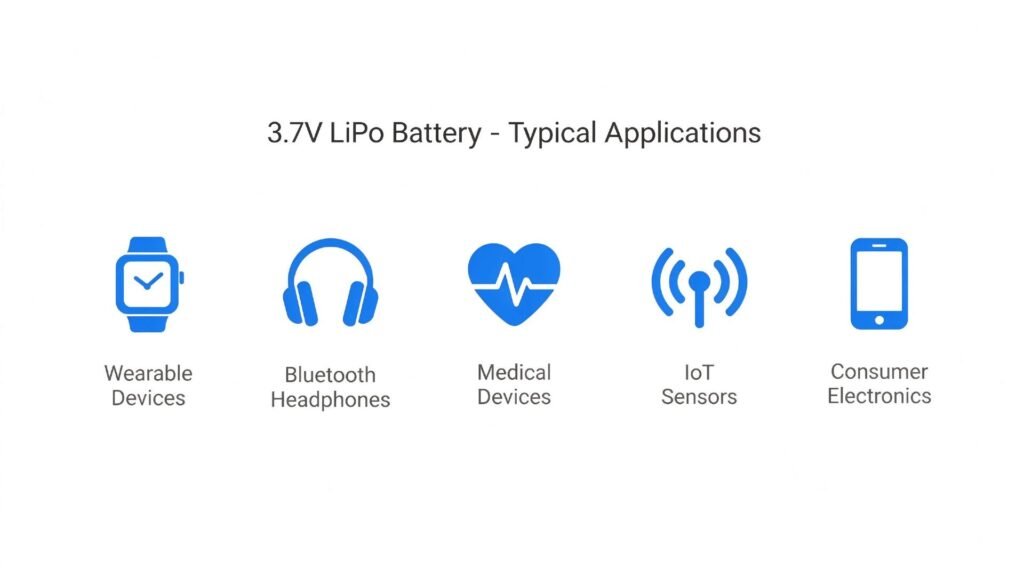
Our 3.7V Li-Po cells are deployed across multiple industries:
| Industry | Typical Applications |
|---|---|
| Wearable Devices | Smartwatches, fitness trackers, smart glasses, AR/VR headsets, smart rings, health monitoring patches |
| TWS Earbuds & Audio | True wireless stereo earbuds, Bluetooth headphones, portable speakers, hearing aids |
| Medical Devices | Continuous glucose monitors (CGM), ECG/heart rate monitors, insulin pumps, inhalers, portable diagnostic equipment |
| IoT Sensors | Environmental monitors (temperature, humidity, air quality), asset trackers, GPS locators, smart home sensors |
| Consumer Electronics | Wireless keyboards/mice, stylus pens, remote controls, portable chargers, power banks |
Technical Specifications – What OEM Buyers Need to Know
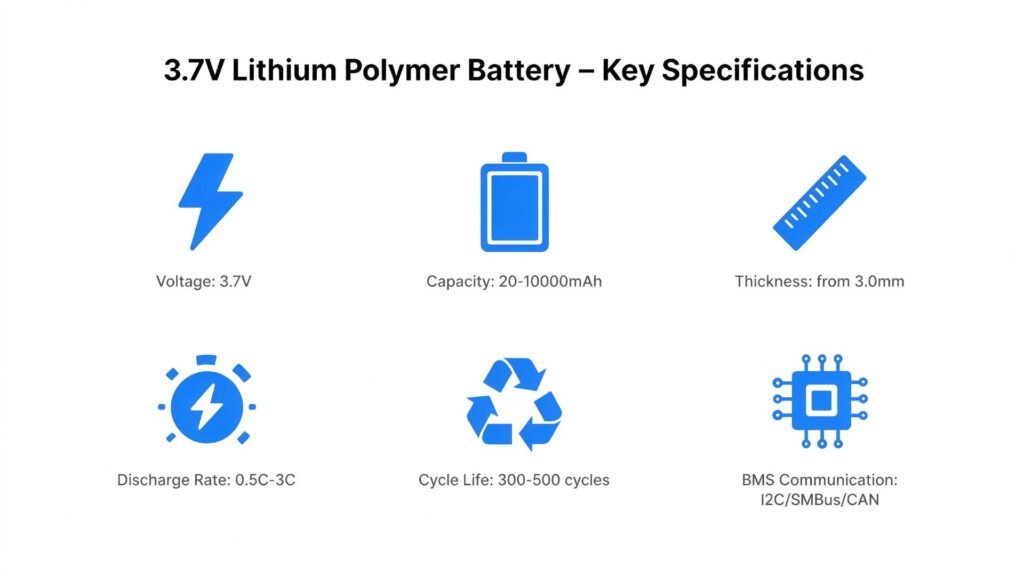
When sourcing a 3.7V Li-Polymer battery, these are the key parameters to define for your project:
| Parameter | Typical Range | Why It Matters |
|---|---|---|
| Capacity (mAh) | 20 – 10,000+ | Determines device runtime — higher capacity = longer usage between charges |
| Dimensions (mm) | Custom (thickness from 3.0mm) | Must fit within your device enclosure — custom shapes available |
| Discharge Rate (C) | 0.5C – 3C (up to 10C for high-drain) | Higher discharge rates needed for high-power devices (motors, audio amplifiers) |
| Operating Temperature | 0°C–45°C (charge), -20°C–60°C (discharge) | Must match your device’s operating environment — wide-temp cells available for industrial use |
| Cycle Life | 300 – 700+ cycles | Affects device longevity and warranty costs — high-cycle formulations available |
| BMS Communication | I²C, SMBus, CAN, HDQ | Required for smart devices that report battery status (SoC, SoH, temperature) |
| Internal Resistance | 30–200mΩ (varies by size) | Lower resistance = less voltage drop under load and better high-drain performance |
Customization Options
As a custom lithium polymer battery manufacturer, A&S Power offers extensive customization to match your product’s unique requirements:
| Customization Area | Available Options |
|---|---|
| Capacity | From 20mAh to 10,000mAh+ — tailored to your runtime requirements |
| Dimensions | Custom thickness, length, and width — as thin as 3.0mm |
| Shape | Rectangular, curved, stepped, notched, or ultra-thin custom geometries |
| PCM / BMS | Overcharge, over-discharge, short-circuit, overcurrent, and temperature protection |
| Communication | I²C, SMBus, CAN bus, HDQ protocols for smart battery integration |
| Terminals | Wire leads, JST, Molex, Anderson, or custom connectors |
| Labeling | OEM branding with your logo, model number, and product specifications |
| Packaging | Industrial bulk or retail-ready blister packaging |
| Certifications | UL, CE, RoHS, UN38.3, IEC62133 — full documentation included |
3.7V Li-Po vs 3.7V Li-Ion – What’s the Difference?
Both chemistries offer 3.7V nominal voltage, but their physical form and performance characteristics differ significantly:
| Feature | Li-Polymer (Pouch) | Li-Ion (Cylindrical/Prismatic) |
|---|---|---|
| Electrolyte | Gel-like polymer | Liquid |
| Form Factor | Flexible pouch, custom shapes | Rigid cylindrical (18650, 21700) or prismatic |
| Minimum Thickness | 3.0mm (ultra-thin designs) | ~5–8mm (prismatic) or fixed cylinder diameter |
| Energy Density | High (150–300 Wh/kg) | Very high (200–350 Wh/kg) |
| Design Flexibility | Excellent — any shape or size | Limited to standard cell sizes |
| Safety | Good — gel electrolyte reduces leak risk | Good — rigid casing provides physical protection |
| Best For | Wearables, TWS, medical, IoT, thin devices | Power tools, e-bikes, laptops, high-drain applications |
Safety Certifications – Critical for OEM Buyers
Every 3.7V Li-Polymer battery we manufacture meets international safety standards. We provide full compliance documentation with every order — saving you time and reducing your regulatory burden.
| Certification | What It Means for Your Product |
|---|---|
| UN38.3 | Safe air and sea transport — mandatory for global shipping. Freight forwarders will reject shipments without it. |
| UL 1642 / 2054 | Safety tested for electrical, mechanical, and fire hazards — essential for North American markets and major retailers. |
| CE | Required for products sold in the European Union — confirms compliance with EU safety, health, and environmental requirements. |
| RoHS / REACH | Free from restricted hazardous substances — required in the EU and many other regions globally. |
| IEC 62133 | International safety standard for portable sealed secondary cells and batteries — widely accepted in Asia and Europe. |
| ISO 9001 / ISO 14001 | Quality management and environmental systems — proven consistency, traceability, and sustainability. |
For detailed compliance guidance, read our Lithium Battery Safety & Compliance Guide for OEM Buyers.
Why Choose A&S Power for Your 3.7V Li-Polymer Battery Needs
There are many battery suppliers out there. Here is what sets A&S Power apart:
| Advantage | Details |
|---|---|
| True Customization | We design batteries to your exact dimensions, capacity, voltage, and connector requirements. No off-the-shelf compromises — we engineer the battery to fit your device. |
| Engineering Support | Our team provides design reviews, thermal modeling, BMS customization, and 3D CAD modeling to ensure seamless integration into your product. |
| Direct Factory Pricing | As a factory-direct manufacturer, we offer competitive pricing without sacrificing quality. No middlemen, no markups. |
| Rigorous Quality Control | 100% final functional testing and visual inspection on every battery. Batch-level traceability for full accountability. |
| Full Compliance Documentation | UL, CE, RoHS, UN38.3, and IEC62133 certifications provided with every order — so you can focus on your product, not regulatory paperwork. |
| Global Shipping | UN38.3 certified for safe air and sea transport to customers worldwide — North America, Europe, Asia, and Australia. |
Frequently Asked Questions
1. What is the typical cycle life of a 3.7V Li-Polymer battery?
Under standard conditions (0.5C charge/discharge, 25°C ambient), our cells deliver 300–500 cycles to 80% capacity retention. With optimized cell chemistry and careful design, we can extend this to 700+ cycles for high-longevity applications.
2. Can I customize the dimensions of a 3.7V Li-Polymer battery?
Yes. We can manufacture batteries in virtually any shape and size — thickness as low as 3.0mm, and any length/width you require. Curved, stepped, and notched geometries are available for complex enclosures.
3. What is the minimum order quantity (MOQ)?
MOQ depends on the cell size and complexity. For standard pouch cells, MOQ starts at 1,000–3,000 units. For fully custom designs, we can work with lower quantities (50–500 pcs) for prototyping and validation.
4. Do you provide UL, CE, RoHS, and UN38.3 certifications?
Yes. We provide full compliance documentation with every order, including UN38.3 test summaries, UL/CE/RoHS certificates, IEC 62133 reports, and MSDS/SDS sheets.
5. What is the difference between a 3.7V Li-Polymer and a 3.7V Li-Ion battery?
Li-Polymer batteries use a gel-like electrolyte and flexible pouch, allowing for ultra-thin and custom shapes. Li-Ion batteries typically use liquid electrolyte in rigid cylindrical or prismatic casings. Li-Polymer offers greater design flexibility and is generally preferred for compact, space-constrained devices. See our comparison table above for full details.
6. Can you include custom connectors or BMS communication?
Yes. We support all standard connector types (wire leads, JST, Molex, Anderson, XT60) and offer BMS with I²C, SMBus, CAN, and HDQ communication protocols for smart battery integration.
7. How long does sample development take?
Typical sample lead time is 2–4 weeks from specification finalization. This includes cell fabrication, PCM/BMS assembly, encapsulation, and full testing. Mass production takes 4–6 weeks after sample approval.
8. Do you ship to Europe, North America, and Australia?
Yes. We ship globally with full UN38.3 certification. We have active customers across North America, Europe, Asia, and Australia, and can handle both air and sea freight.
9. What is the full charge voltage and cutoff voltage for a 3.7V Li-Po cell?
A 3.7V Li-Po cell charges to 4.2V full charge and should not be discharged below 3.0V cutoff. For long-term storage, maintain 3.7–3.8V (40–60% charge). See our voltage reference table above.
10. How should I store 3.7V Li-Polymer batteries long-term?
Store at 40–60% charge (approximately 3.7–3.8V per cell) in a cool, dry place between -20°C and 35°C. Avoid full-charge storage for extended periods, as this accelerates capacity degradation. Check voltage every 3–6 months and recharge if below 3.5V.
Get a Quote for Your 3.7V Li-Polymer Battery Project
Ready to power your device with a custom 3.7V Li-Polymer battery? Contact A&S Power today for a free engineering review and quotation. We provide full compliance documentation and engineering support with every order — so you can focus on your product, not battery sourcing.