
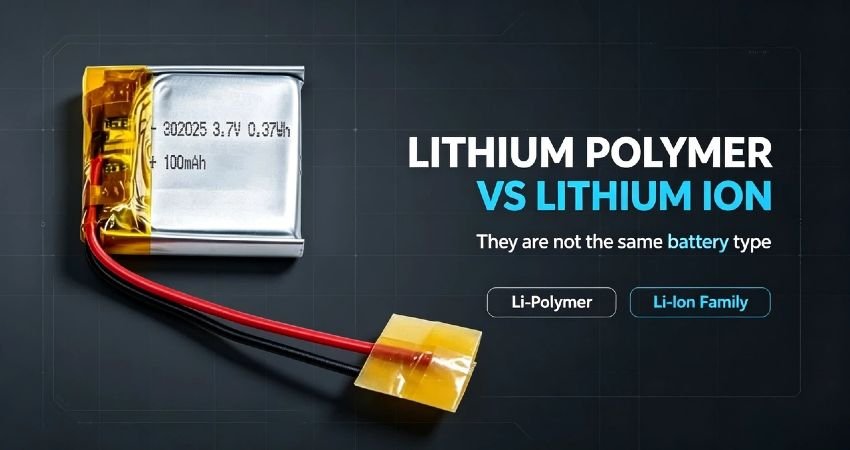
If you’ve shopped for a replacement battery for your handheld game console, mini drone, or that viral neck air conditioner everyone’s wearing this summer, you’ve definitely stared at product listings and wondered: is a lithium polymer battery the same as lithium ion? It’s the #1 question we get at A&S Power, and half the DIY battery fails we see happen because people mix the two up — including the guy who thought his new custom PSP battery was dead, when he just had greasy Cheeto fingerprints on the contacts. Short answer: No, they’re not identical. Think of lithium ion as the whole family of rechargeable lithium batteries, and li polymer battery (aka li-po, the soft foil-wrapped packs you see in every tiny portable gadget) as the fan-favorite cousin that shows up to every hangout with the good snacks. Let’s break this down without the boring chemistry textbook lecture.
The actual difference, explained for people who don’t have an engineering degree
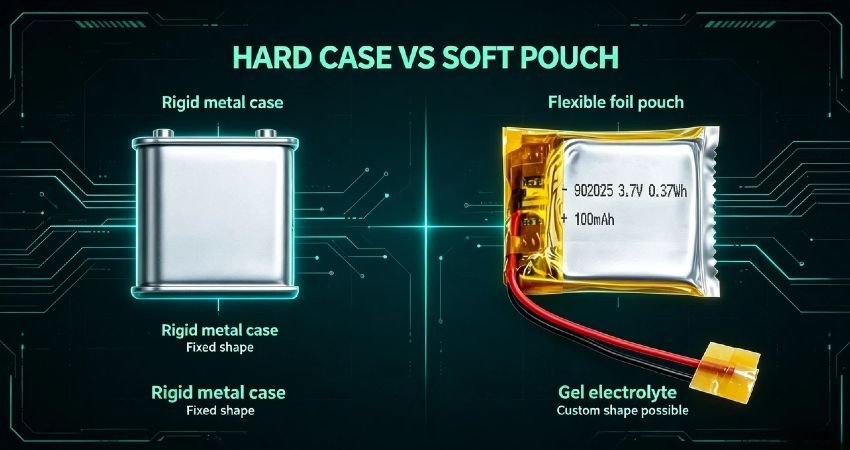
Regular old cylindrical lithium ion batteries are the hard, metal-wrapped cells you see in old power tool packs and 2010s laptop batteries. They’re cheap, sturdy, but they’re stuck in fixed rigid shapes and sizes — you can’t squish them into a 3mm thin card-sized power bank or a curved neck AC unit without a ton of wasted space. Lithium polymer batteries (what most hobbyists and product designers call lithium polymer li poly batteries, or just “lipos” for short) use a soft, gel-like electrolyte wrapped in a flexible foil pouch instead of a hard metal case. That means we can make them in literally any size or shape.
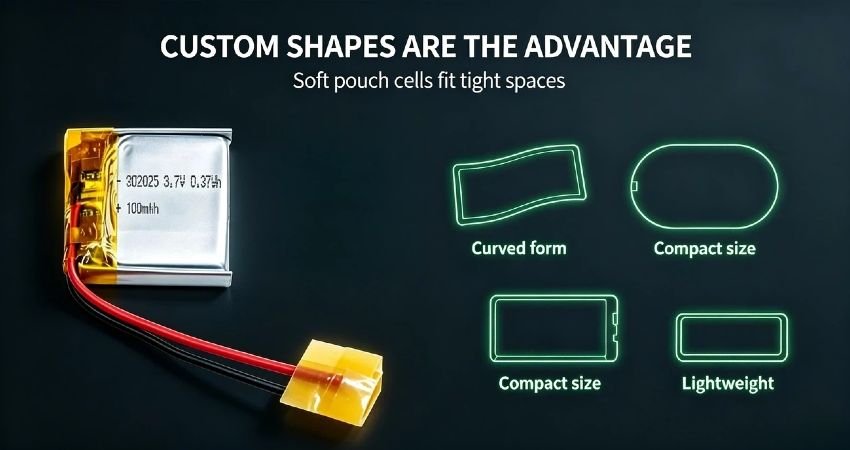
curved to fit a wearable fitness tracker, extra compact for a tiny Bluetooth earbud case. They’re lighter, hold a steady charge for small high-draw devices, and are way less likely to leak if you jostle them around in your backpack. That’s why every viral portable gadget of summer 2026 — from pocket clip-on fans to AI voice recorders to mini follow-focus drones — runs on li-poly cells. Even the tiny clip-on power banks people take hiking, paired with small foldable lithium ion battery solar panels for off-grid phone charging, use li-poly cells because they barely add any weight to your pack.
The $3 mistake that makes people think their li-poly battery is dead
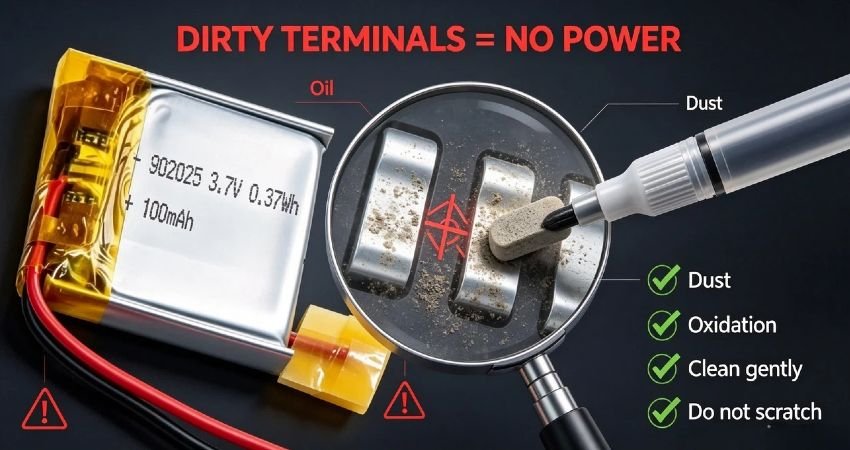
Because these batteries are so easy to customize, tons of hobbyists and small product makers buy loose li-poly cells to mod their own gadgets: bigger batteries for retro handhelds, longer flight time for drones, louder portable Bluetooth speakers. And we see the exact same silly mistake every single week: people install the battery, it won’t turn on, and they immediately leave a 1-star review saying the battery arrived dead. 9 times out of 10? The battery is perfectly fine. It’s dirty contact terminals. When you’re handling the battery to install it, oil from your fingers, Cheeto dust, workbench sawdust, or tiny bits of storage oxidation builds up on the thin metal contact tabs. That barely visible layer of gunk creates enough resistance to stop power from flowing entirely, and you’ll sit there for 20 minutes pressing the power button like an idiot, convinced you wasted your money. You don’t need to send the battery back, you don’t need to buy a new one — you just need a cheap battery terminal cleaner (the little pen-style contact cleaners work perfect for small li-po tabs) to wipe the gunk off the metal contacts. We had a customer last week email us fuming that his 3000mAh custom Game Boy battery was DOA, saying he’d waited two weeks for it to arrive and couldn’t play his old Pokemon save. Our support rep didn’t even run diagnostics — he just told him to wipe the contact tabs with a clean pencil eraser (the DIY hack for a terminal cleaner when you don’t want to run to the hardware store). He wrote back 2 minutes later saying it turned on first try, and he’d already put 3 hours into his playthrough. Quick pro tip: Don’t go at the tabs with sandpaper or a pocket knife, you’ll scratch the thin anti-oxidation plating and make gunk build up way faster. A soft contact cleaner or even a clean eraser works perfectly, takes 10 seconds, and saves you a week of waiting for a replacement.
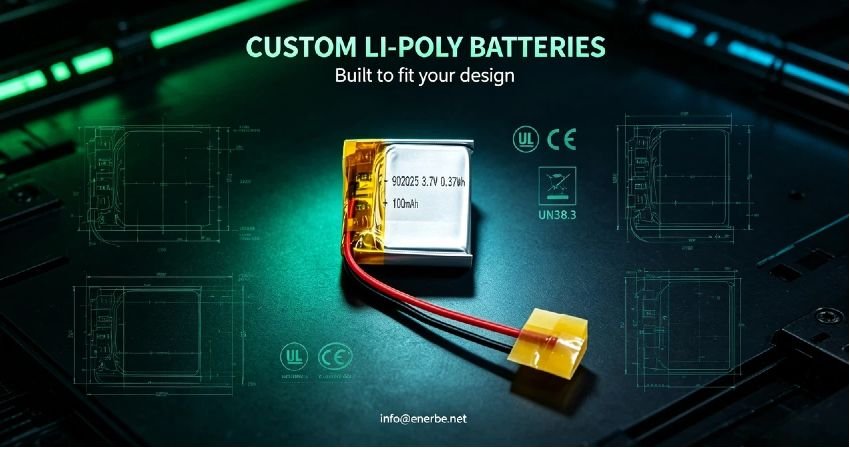
At A&S Power, we make custom li polymer batteries for every small gadget you can think of: from tiny cells for hearing aids and Bluetooth trackers, to high-drain packs for FPV drones, to slim packs for portable chargers and wearable tech. We don’t just ship cells and ghost you, either — we include little installation tips with every order, because we’d rather you spend time playing your games or using your gadgets than troubleshooting a greasy fingerprint on a metal tab. If you’re trying to pick the right battery for your next gadget build, or you need a custom shaped li-poly cell for a new product design, our team is here to help.
Get in Touch
- Tel: +86 137 1383 1631
- Email: info@enerbe.net