
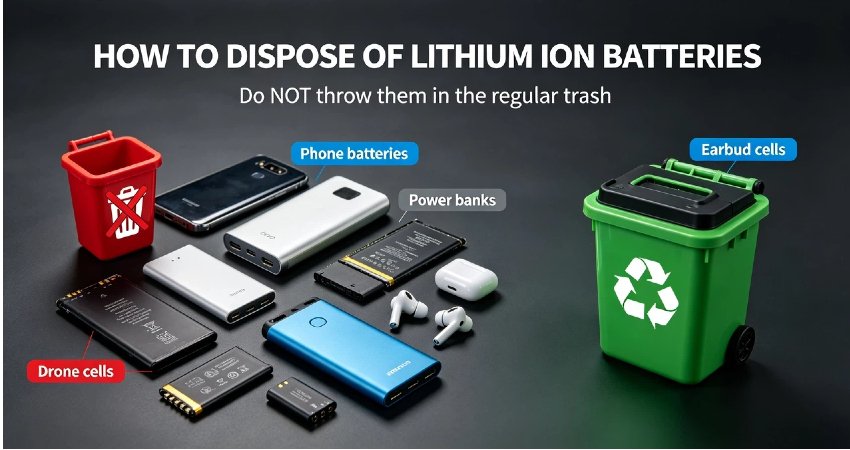
If you’re staring at a drawer full of old phone batteries, puffy power banks, and dead drone cells and Googling how to dispose of lithium ion batteries, you’re not alone — and if you accidentally typed “lithium ion battery battery” mid-panic because you saw that local news clip of a trash truck catching fire from a discarded cell, we see you, no judgment. Summer 2026 has been a wake-up call for a lot of people: record heat is making old batteries swell, recycling centers are reporting 3x more fires from improperly discarded cells, and 90% of people are still throwing their old batteries in the kitchen trash without a second thought. At A&S Power, we’ve built custom lithium ion batteries for consumer electronics, drones, and portable devices for over a decade, and we’ve seen every possible disposal mistake — from people trying to burn old batteries in bonfires to travelers shoving puffy old drone cells in checked bags. This is the no-BS guide to getting rid of old li-ion cells safely, no confusing government website jargon included.
First: Why you can’t just throw these in the regular trash
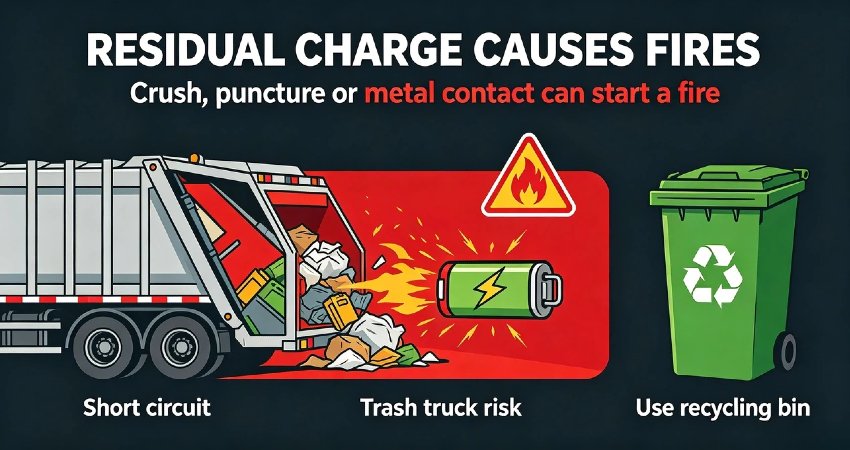
Let’s cut to the chase: tossing loose lithium ion batteries in your household garbage or curbside recycling bin is not just bad for the planet — it’s legitimately dangerous. Unlike old single-use cells, li-ion batteries hold a residual charge even when they appear “dead.” If they get crushed in a garbage truck, punctured by a broken bottle in a recycling bin, or jostled around with loose metal trash, they can short out, catch fire, or even explode. This isn’t fear-mongering: our local fire department posted a clip last month of a trash truck that burned up on the highway because someone threw an old power bank in their bin. The driver barely got out in time. This rule applies to every single li-ion cell you own: old phone batteries, dead laptop cells, drone batteries, power banks, even the tiny li-ion cells in old wireless headphones. None of them go in the regular trash.
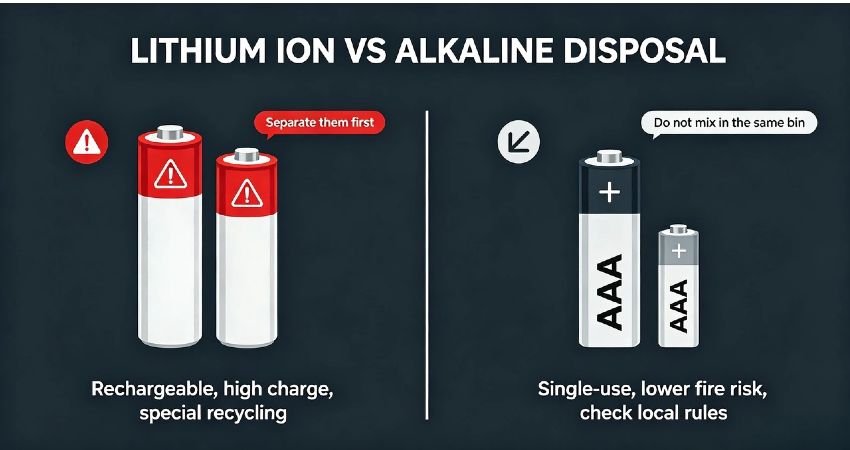
Quick side note: Lithium ion battery vs alkaline disposal rules (stop mixing them up!)
This is the #1 question everyone asks when cleaning out their junk drawer: lithium ion battery vs alkaline — do I have to dispose of them the same way? Short answer: No. Regular single-use alkaline batteries (the AA/AAA ones you buy in bulk for TV remotes) are made with non-toxic metals these days, and in most places you can throw them in the regular trash (though it’s still better to recycle them if you can). They don’t hold a high enough charge to start fires when crushed, and they don’t have the toxic heavy metals 90s-era alkaline cells did. Lithium ion batteries? They’re rechargeable, hold a much higher charge, and can spark fires if damaged — which is why they have special disposal rules. Mixing them up with your old AA batteries and dumping them in the trash is exactly how those trash truck fires start. If you’re sorting through your junk drawer, take 2 minutes to separate the rechargeable li-ion cells from the single-use alkaline ones. It’s not hard, and it saves a garbage driver a very bad day.
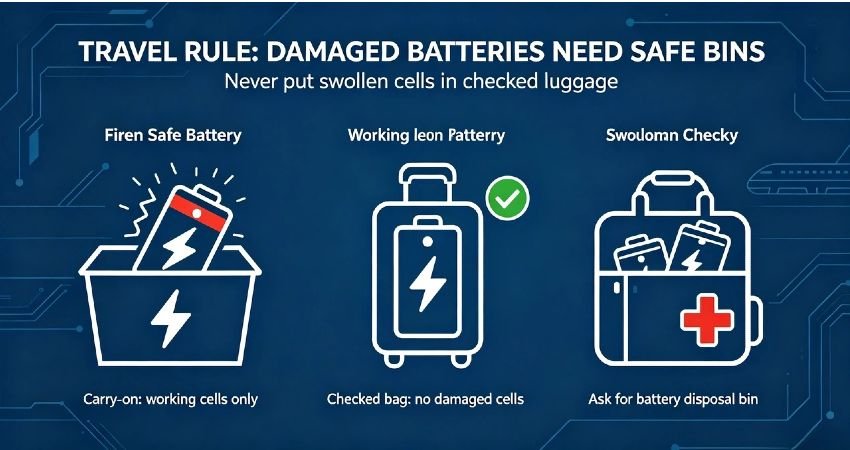
The travel rule: Lithium ion battery and flying disposal do’s and don’ts
If you’re traveling this summer, you’ve definitely seen the giant signs at airport security about loose li-ion batteries. This is another spot people mess up disposal constantly. First, the basics: you can bring working, undamaged lithium ion batteries in your carry-on bag (never checked bags, for the same fire risk we talked about earlier). But if you show up to security with a puffy, swollen, clearly damaged old battery you were planning to throw away? Security will make you toss it in their designated battery bin — and that’s actually the right move. Most airport security checkpoints have special fire-safe hazardous waste bins for old/damaged li-ion cells, so you don’t have to carry a dead battery all the way on your trip. What you shouldn’t do: try to bring a swollen battery on the plane because you “didn’t know how to throw it away at home,” or shove a dead battery in an airport trash can full of food waste and coffee cups. Those regular trash cans don’t have fire protection, and a shorted battery can easily start a fire in the terminal. If you’ve got a dead battery you need to get rid of before a flight, just ask a security agent where the battery disposal bin is. They’ll point you right to it, no eye-rolling included.
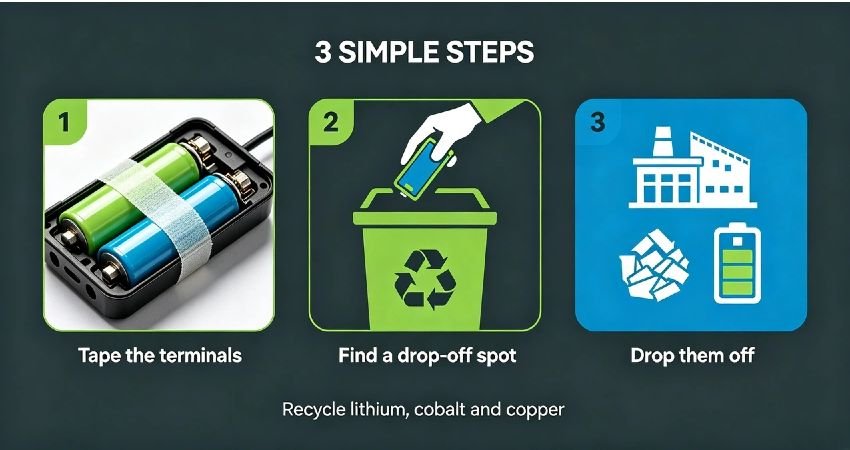
How to dispose of lithium ion batteries in 3 dead-simple steps
You don’t need a hazardous waste permit or a special trip to the dump to get rid of old li-ion cells. The whole process takes 5 minutes, tops:
- Prep the batteries first: Take a piece of regular packing tape and cover the exposed metal terminals on every battery. This stops them from shorting out if they touch other batteries or loose metal in the collection bin. You don’t need fancy electrical tape, even regular scotch tape works. If a battery is really puffy and swollen, tuck it in a fireproof battery bag or old metal tin before you take it in, just to be extra safe.
- Find a drop-off spot: Almost every big box electronics store, home improvement store, public library, and local battery shop has free li-ion battery recycling bins. You don’t have to buy anything, you just walk in and drop your old cells in the bin. Most cities also hold annual household hazardous waste days where you can drop off old batteries for free.
- Drop them off and forget about it: That’s it. No forms to fill out, no fees to pay. The batteries get sent to a processing facility where the lithium, cobalt, and copper get extracted and reused in new batteries, instead of ending up in a landfill or starting a fire in a trash truck.
The dumb mistakes to avoid at all costs
We’ve seen people do some wild stuff with old batteries, so save yourself the headache:
- Don’t throw li-ion batteries in the regular trash or curbside recycling
- Don’t burn them in bonfires or fire pits (they can explode, we’ve seen it happen at company campouts)
- Don’t try to puncture or take apart swollen batteries
- Don’t shove loose, un-taped batteries in a junk drawer with keys and nails where they can short out
- Don’t bring swollen, damaged batteries on planes, either in carry-on or checked bags At the end of the day, li-ion batteries are incredibly safe and reliable when they’re in use — you just have to get rid of them the right way when they’re done. At A&S Power, we build safe, long-lasting custom lithium ion battery packs for every use case, from tiny wearable cells to high-drain drone batteries. We don’t just ship batteries and ghost you, either: we walk every customer through use, storage, and end-of-life disposal, so you never have to panic-Google how to dispose of lithium ion batteries at 11pm the night before trash day.
Get in Touch
If you’re looking for a custom li-ion battery for your next project, or you have questions about recycling old cells, reach out anytime:
- Tel: +86 137 1383 1631
- Email: info@enerbe.net