
Lithium Battery Operating Temperature: High & Low Temp Guide
Published by A&S Power | Battery Engineering & Custom Packs
Introduction
When engineers size a battery, they usually start with voltage, capacity, and the discharge rate. Temperature is the spec that gets checked last, and it is the one that decides whether the same battery works in the field the way it worked on the bench. A lithium polymer cell that performs cleanly at 25°C is a different device in a −20°C cold-storage room or a sealed enclosure sitting at 60°C.
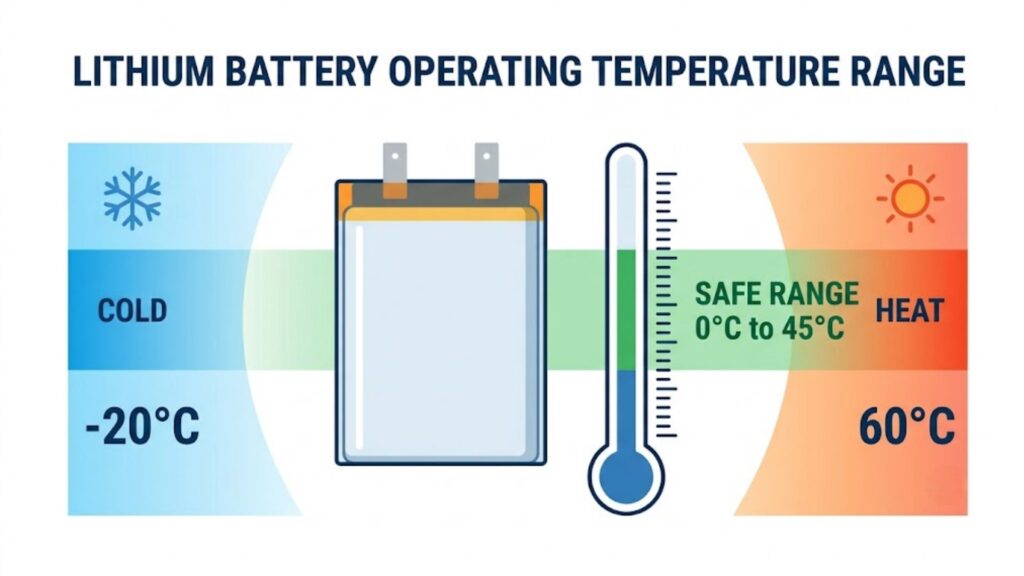
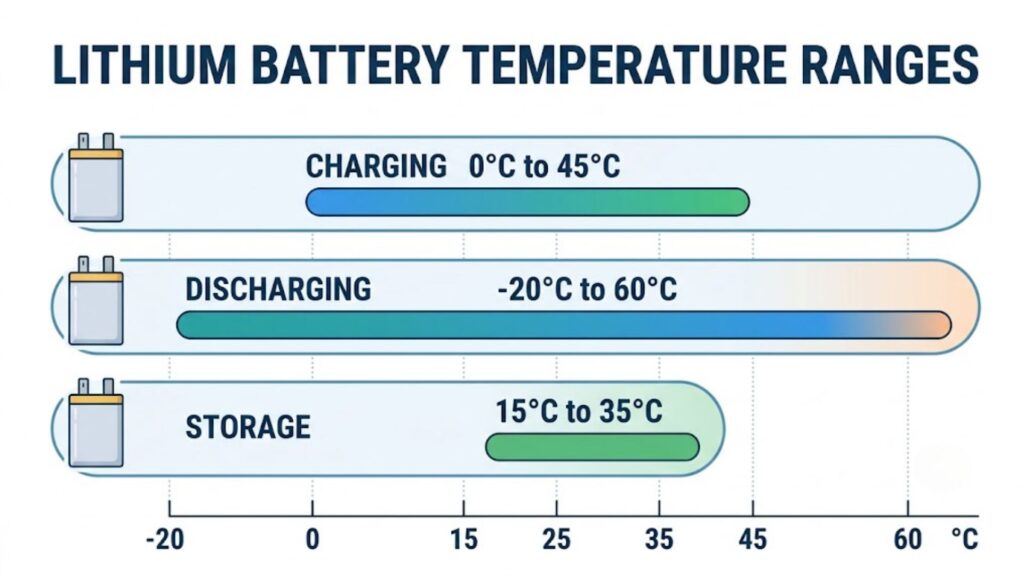
The short answer: a standard Li-ion or LiPo cell charges from about 0°C to 45°C, discharges from about −20°C to 60°C, and stores best around 15°C to 35°C at 40–60% charge. Charging below 0°C is the main rule not to break, because cold charging plates lithium metal onto the cell. Applications outside that window need a wide-temperature cell and a thermal design, not a standard cell pushed harder.
At A&S Power, we build custom lithium polymer cells and packs for OEM products, including cells rated for extended high and low temperatures. This guide covers the charge, discharge, and storage temperature limits, why cold and heat cut performance and life, and how to specify a high or low temperature battery for a real device. If you are new to the chemistry, our introduction to lithium polymer batteries covers the basics, and the LiPo voltage and C-rating chart gives the safe voltage window per cell.
Why Temperature Is a Battery Design Constraint
A lithium cell is an electrochemical system, and temperature sets the speed of everything inside it. The lithium ions move through the electrolyte, pass into the graphite negative electrode, and react at the electrodes. Lower the temperature and those movements slow down and meet more resistance. Raise it and the reactions run faster, including the side reactions that age the cell.
That single fact drives the four quantities a product team cares about: usable capacity, internal resistance (which sets how much current the cell can deliver and how much heat it makes), service life, and safety. A cell that meets the spec at 25°C can show lower capacity, lower voltage under load, and far fewer cycles once the temperature moves away from room conditions.
Datasheets name more than one temperature for this reason. There is a charging range, a discharging range, and a storage range, and they are not the same. The charging window is the narrowest because putting lithium back into the negative electrode is harder to control than taking it out. Designing against a single “operating temperature” number is usually where problems start.
Standard Lithium Battery Temperature Ranges
The table below is the typical window for a standard Li-ion or lithium polymer pouch cell with a standard electrolyte and separator. Cell makers vary a few degrees, so the datasheet of the selected cell is the final authority.
| Condition | Typical range, standard cell | Notes |
|---|---|---|
| Charging | 0°C to 45°C | Narrowest window. Do not charge below 0°C. Best around 10–30°C. |
| Discharging | −20°C to 60°C | Wider than charging, but capacity and voltage drop at the cold and hot edges. |
| Long-term storage | 15°C to 35°C | Keep at 40–60% charge. Around 20–25°C is ideal. |
| Short-term storage | −20°C to 35°C | For days to a few weeks. Avoid both full and empty states. |
A standard product on our line, the 3.7V 900mAh AS703040 in our high temperature battery range, is specified for a safe operating span of −20°C to +70°C with an NTC thermistor fitted, and long-term storage at 15°C to 35°C.
If your device runs a charging circuit below 0°C, or spends its life above 60°C or below −20°C, a standard cell is the wrong starting point. Those applications need a wide-temperature cell and often a heater or a thermal layout. That is covered later in the guide.
What Cold Does to a Lithium Cell
Cold has two separate effects, and people often treat them as one. Discharging a cold cell loses performance you mostly get back. Charging a cold cell can do damage you do not get back.
Cold discharge: capacity and voltage drop
At low temperature the electrolyte thickens and the graphite accepts lithium slowly. Internal resistance rises, so the cell’s voltage sags under the same load and the device can hit its low-voltage cutoff long before the cell is empty. A pack that delivers its full rated capacity at 25°C may give noticeably less at −10°C, and high-rate loads (a motor, a transmitter, a cold-start pulse) pull the voltage down the hardest. Warm the cell back to room temperature and most of that capacity returns, because the slowdown is physical rather than chemical damage.
Cold charge: lithium plating
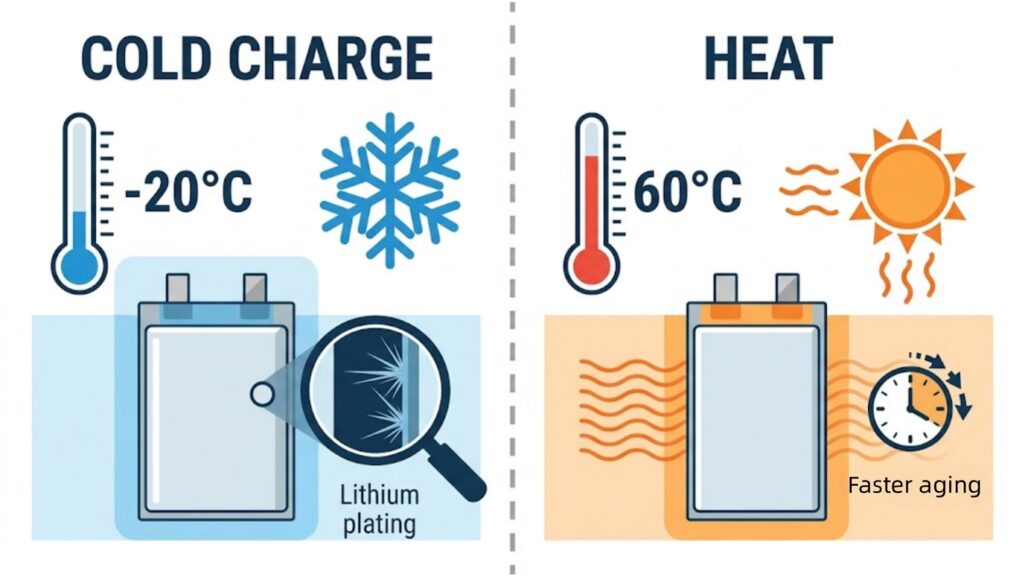
Charging is different. When you force current into a cold cell, the graphite cannot absorb the lithium ions fast enough, so lithium metal deposits on the negative electrode surface as a gray layer instead of going into the structure. This is lithium plating. It permanently removes lithium from the cycle, so capacity fades, and it can grow needle-like dendrites that pierce the separator and create an internal short. Plating is the main reason a well-designed BMS blocks charging below about 0°C (sometimes 3–5°C) until the cell warms.
Never charge a lithium cell below its rated minimum charge temperature. A cold pack that has been run in the field should be brought inside and allowed to warm before charging. A charger that runs overnight in an unheated space in winter can plate lithium even though it never reports an error.
The practical fixes for cold products are low-temperature cells with a low-viscosity electrolyte and an improved negative electrode, lower charge and discharge rates at the cold end, and pre-warming the pack with a heater before charging. These are pack-level design choices, not things a tougher charger can fix.
What Heat Does to a Lithium Cell
Heat works the other way. Reactions run faster, including the slow parasitic side reactions that age a cell. The protective SEI layer on the negative electrode grows thicker, the electrolyte slowly oxidizes, internal resistance climbs, and usable capacity drops on a calendar clock even if the pack is never cycled. As a rough rule of thumb, sustained temperature rises of about 10°C–15°C can roughly double the aging rate, so a pack that lasts years at 25°C can last a fraction of that held at 55°C.
Heat also narrows the safety margin. Charging a hot cell adds plating and overcharge risk on top of the existing side reactions. High-rate discharge in a sealed enclosure raises the cell’s own temperature on top of a hot ambient. Push far enough and the separator can shrink, the electrolyte can decompose in a self-heating loop, and the cell can vent, swell, or reach thermal runaway. That end stage is well above normal operating temperature, but it begins with ordinary chronic heat.
| Ambient condition | What to expect |
|---|---|
| Up to 45°C | Inside the normal charge window; still cooler is better for long life. |
| 45–60°C | Discharge may be allowed, but charging is typically blocked; sustained exposure accelerates aging. |
| Above 60°C | Requires a high-temperature rated cell and thermal design; a vehicle dashboard or sun-exposed enclosure can reach this. |
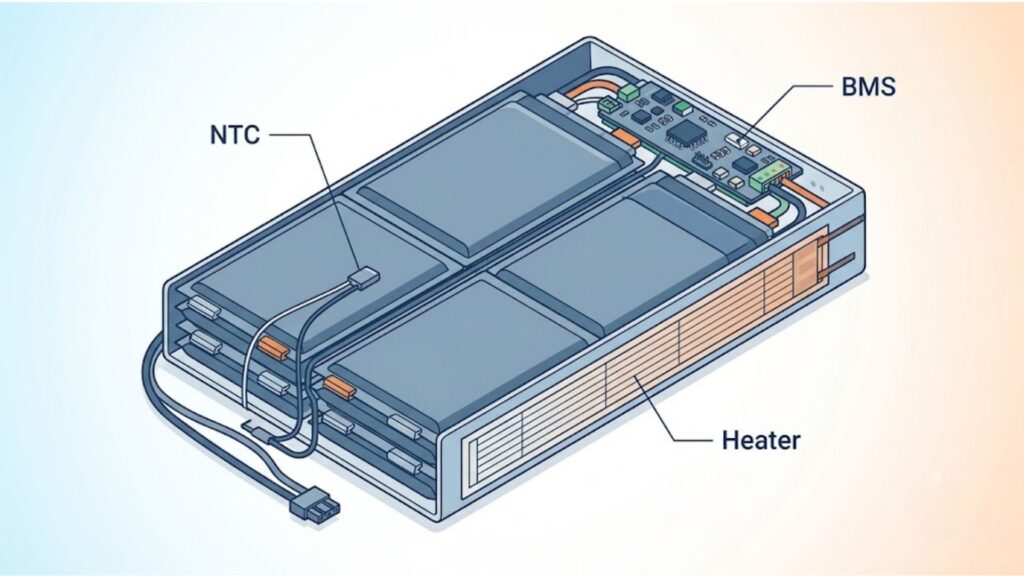
The design response is a combination of a heat-tolerant chemistry (ceramic-coated separators, a high-temperature electrolyte, or an LFP cell where the voltage fits), de-rating the current when the pack is hot, an NTC that tells the BMS when to back off, and real heat paths such as spacing, vents, or a thermally conductive path to the enclosure.
The Right Storage Temperature and State of Charge
Storage is where temperature and state of charge combine. The most damaging shelf condition is a fully charged pack in a hot place, because a high state of charge and heat both push the same aging reactions. The safest long-term condition is roughly 40–60% charge (about 3.8–3.85V per cell) in a cool, dry place at 15–25°C.
- Do not store a pack at 100% charge for weeks or months, especially in heat.
- Do not store it below about 3.0V per cell. Deep discharge can dissolve the copper current collector and a left-for-dead pack may not accept a safe charge.
- Top up shelf stock every few months to bring it back to about 50% charge.
- Keep packs out of direct sun and away from heat sources in storage and shipping.
Our LiPo storage guide covers shelf voltage, stock rotation, and how to hold packs before assembly. For warehouses in hot climates, air-conditioned storage is a real factor in the warranty return rate, not a luxury.
Choosing High- and Low-Temperature Batteries
Before choosing a cell, define the thermal profile of the product rather than a single number: the coldest and hottest ambient it will run in, whether it ever charges in the cold, the continuous and peak current, the expected cycle life, and whether the enclosure is sealed or ventilated. That profile points to one of three starting points.
| Application | Thermal challenge | Typical approach |
|---|---|---|
| Cold-chain and freezer asset trackers | Long cold soak, no charging below 0°C | Low-temperature cell, low standby current, warm-up before charge |
| Outdoor drones and winter equipment | Cold voltage sag under high load | Low-temperature high-rate cell, insulation, pre-warmed packs |
| Sealed industrial and outdoor electronics | Heat builds inside a closed box | High-temperature cell, current de-rating, heat path to enclosure |
| In-vehicle and sun-exposed devices | Parked vehicle can reach 60–80°C | High-temperature rated cell, charge cut off until cool, thermal shutdown |
The honest part of the answer: there is no single universal cell that covers the full range from severe cold to severe heat with no trade-off. Low-temperature cells give up some high-temperature stability, high-temperature and LFP chemistries give up some cold cranking, and very wide-temperature packs usually carry a heater or a little more weight and cost. We match the cell and the thermal design to the operating profile and confirm the real limit on the chosen cell rather than quoting one number for every product.
Within the standard window, the earlier AS703040 type cell with a fitted NTC is often enough. Beyond it, the cell, the BMS temperature logic, and the enclosure have to be designed together.
How We Build and Test Temperature-Ready Packs
A temperature rating on a cell means nothing if the pack ignores it. The pack has to measure temperature and act on it. These are the items we build and verify for temperature-sensitive projects.
| Item | What it does |
|---|---|
| NTC thermistor | Senses pack temperature so the BMS can block cold charging, back off hot current, and trigger shutdown. |
| BMS temperature logic | Low-temperature charge cutoff, high-temperature discharge cutoff, and heater control, set to the cell’s real limits. |
| Integrated heater | A heating film or element warms cold packs to the charge threshold; insulation holds the heat in outdoor use. |
| Capacity and resistance checks | Cells are graded for capacity and internal resistance so matched cells go into a pack and weak ones are removed. |
| Environmental and transport tests | Where the project needs it, thermal cycling and high-temperature aging, with UN38.3 transport tests and IEC62133 safety documentation. |
The BMS thresholds are always written against the selected cell’s datasheet, not against the widest number we can find. A limit set too loose quietly voids the protection; one set too tight stops the device from working when it should. On a heated pack, the controller also has to confirm the cell has crossed the charge threshold before allowing current, so the heater does not draw and charge at the same time in a way that confuses the pack.
Our custom pack assembly and BMS guide shows how protection is built in, and the manufacturer selection guide lists the questions to ask a supplier before the project starts.
Frequently Asked Questions
1. What is the normal operating temperature of a lithium polymer battery?
A standard LiPo cell charges from about 0°C to 45°C and discharges from about −20°C to 60°C. Performance and life are best around 15–30°C. Wide-temperature cells extend these limits, but the selected cell’s datasheet is the final spec.
2. Can I charge a LiPo battery below 0°C?
No, not with a standard cell. Charging below the rated minimum plates lithium metal onto the negative electrode, causing permanent capacity loss and a possible internal short. Use a BMS that blocks cold charging, warm the cell first, or use a heater with a low-temperature rated cell.
3. Why does cold drain a lithium battery so fast?
Cold thickens the electrolyte and raises internal resistance, so voltage drops under load and the device hits its low-voltage cutoff early. Most of the apparent capacity comes back when the cell warms up; the cold run itself does not discharge that energy, it just makes less of it available.
4. Is cold capacity loss permanent?
Cold discharge is mostly reversible. Cold charging is not, because it causes lithium plating. A cell that has been repeatedly charged below 0°C loses capacity for good and should be watched for swelling or rising resistance.
5. At what temperature does a lithium battery overheat?
Most standard cells stop charging above about 45°C and are rated for discharge up to roughly 60°C. The cell is already aging fast well before the high hundreds of degrees where thermal runaway occurs; the practical danger is long chronic heat and charging a hot cell.
6. Does heat permanently damage a lithium battery?
Yes, sustained high temperature permanently ages a cell. The SEI layer thickens and the electrolyte oxidizes, so capacity and power fade faster on a calendar basis. A single hot afternoon usually does not kill a pack, but a product that lives hot will come back early.
7. What is the best storage temperature for lithium batteries?
Store at roughly 15–25°C and 40–60% charge, in a cool, dry place. Avoid full-charge hot storage and deep-discharged storage, and top up shelf stock every few months.
8. What is lithium plating?
It is metallic lithium deposited on the negative electrode when the graphite cannot absorb incoming lithium fast enough, usually during cold or high-rate charging. It causes permanent capacity loss and can grow dendrites that short the cell. Blocking cold charge is the main prevention.
9. Can I add a heater to warm the battery in cold weather?
Yes. Integrated heating films or elements controlled by the BMS and an NTC can warm a pack to the charge threshold before charging, which is a standard approach for cold-chain and outdoor equipment. The heater should be designed into the pack with insulation, not added as an afterthought.
10. How do I specify a battery for extreme cold or heat?
Give us the minimum and maximum running temperatures, whether the device charges in the cold, the continuous and peak current, cycle-life target, and the enclosure size. We select a standard, low-temperature, or high-temperature cell, fit the NTC and BMS temperature logic, and add a heater or thermal layout where the profile needs it.
Temperature-Specific Lithium Battery Packs for Your Product
We build standard and extended high/low temperature cells and custom packs around your real operating profile, with thermal sensing, cold-charge protection, and optional heating built in. Send us the device, its temperature range, the current it draws, and the enclosure space, and we will size the cell and thermal design to fit.
- Standard, low-temperature and high-temperature cells matched to your profile
- PCM/BMS with NTC sensing, low-temp charge cutoff and thermal shutdown
- Optional integrated heater and insulation for cold environments
- UL, CE, RoHS, UN38.3 and IEC62133 documentation with every order