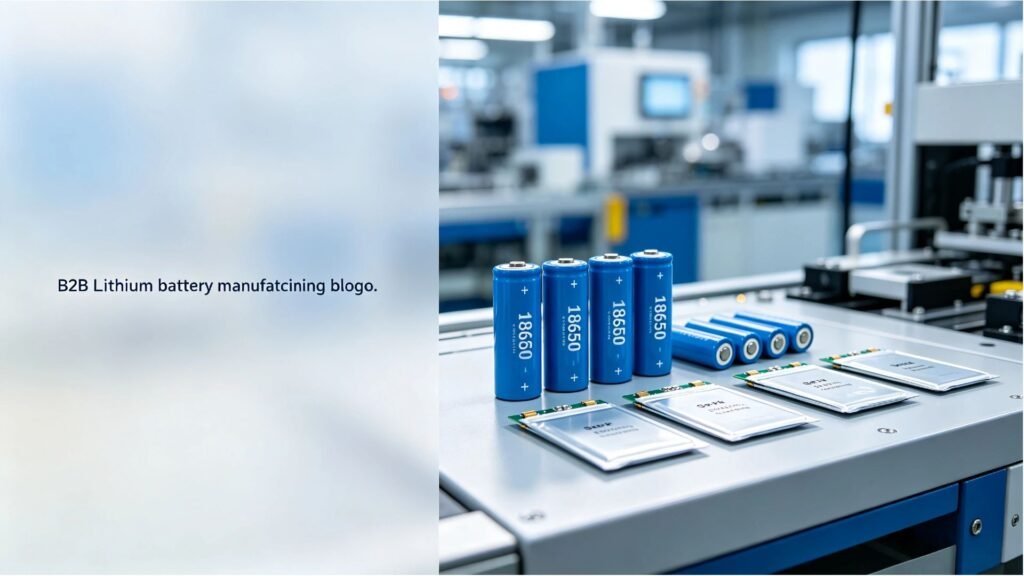
For OEM buyers and product development engineers, understanding lithium-ion battery specifications is the first step in selecting the right power source for your device. At A&S Power, we manufacture custom Li-Ion and Li-Polymer cells for wearables, medical devices, IoT sensors, and portable electronics. Here’s what you need to know about lithium-ion battery technology from a procurement perspective.
Li-Ion vs. Li-Polymer: What’s the Difference for Your Project?
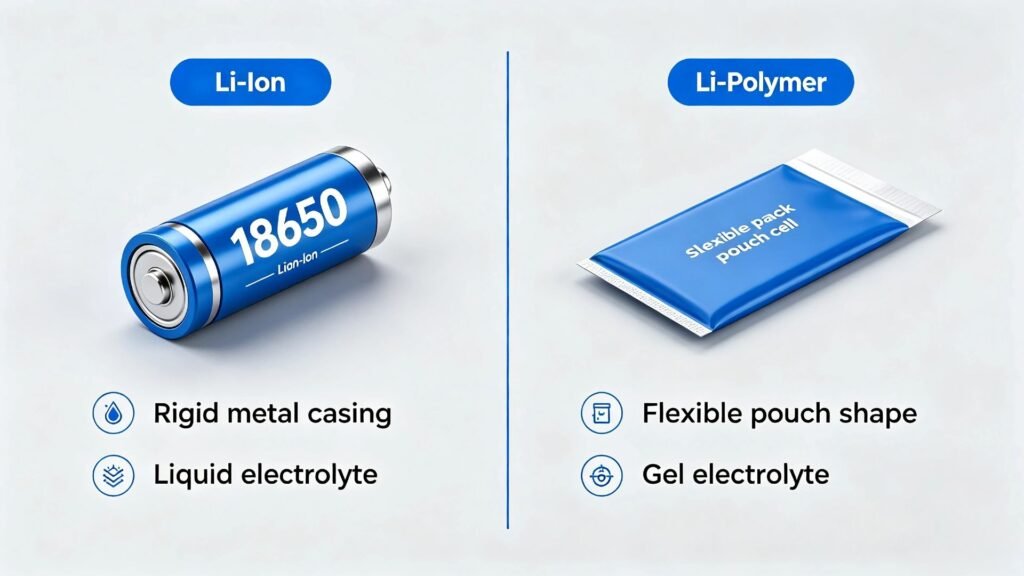
When evaluating battery options for a new product, two chemistries dominate: Lithium-Ion (Li-Ion) and Lithium-Polymer (LiPo) . They share the same electrochemical foundation, but their physical construction and performance characteristics differ significantly.
| Feature | Li-Ion (Cylindrical/Prismatic) | Li-Polymer (Pouch) |
|---|---|---|
| Electrolyte | Liquid organic solvent | Gel-like polymer |
| Casing | Rigid metal or hard plastic | Soft aluminum foil pouch |
| Shape flexibility | Fixed (18650, 21700, prismatic) | Highly customizable (any shape/size) |
| Energy density | High | Comparable, slightly lower in some cases |
| Cycle life | 300–500 cycles | 300–500 cycles (similar) |
| Safety | Requires robust venting mechanism | Less prone to leakage, can swell if damaged |
| Cost | Lower for standard sizes | Higher for custom shapes |
| Common applications | Power tools, laptops, electric vehicles, energy storage | Wearables, TWS earbuds, medical devices, drones |
For OEM buyers: Choose Li-Polymer if your device requires thin, curved, or space-constrained battery placement. Choose Li-Ion (cylindrical) if your product uses a standard battery format and cost optimization is a priority.
Cycle Life and Longevity: What to Expect
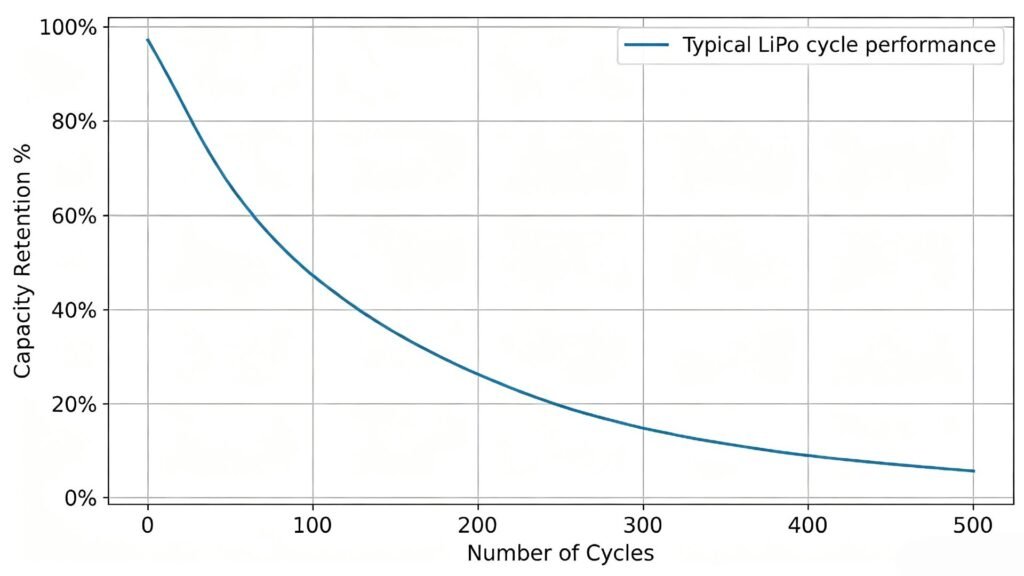
Battery cycle life directly impacts product lifespan and warranty costs. A high-quality lithium-ion cell delivers 300–500 full charge cycles under standard conditions (25°C, 0.5C charge/discharge). This equates to approximately 3–5 years of regular use.
Several factors affect cycle life:
-
Depth of discharge (DoD): Shallower discharges (e.g., 80% DoD instead of 100%) significantly extend cycle life.
-
Temperature: Operating or storing batteries above 45°C accelerates capacity fade. For every 10°C increase above 25°C, cycle life roughly halves.
-
Charge voltage: Charging to 4.2V maximizes capacity but reduces cycle life compared to 4.1V (which gives ~15% fewer cycles but ~30% longer life).
At A&S Power, we provide detailed cycle life data for every custom cell, allowing you to make informed decisions for your product design. Our QC process includes 100% testing of every cell before shipment to ensure consistent performance and reliability.
Safety Certifications and Compliance – What OEM Buyers Must Verify
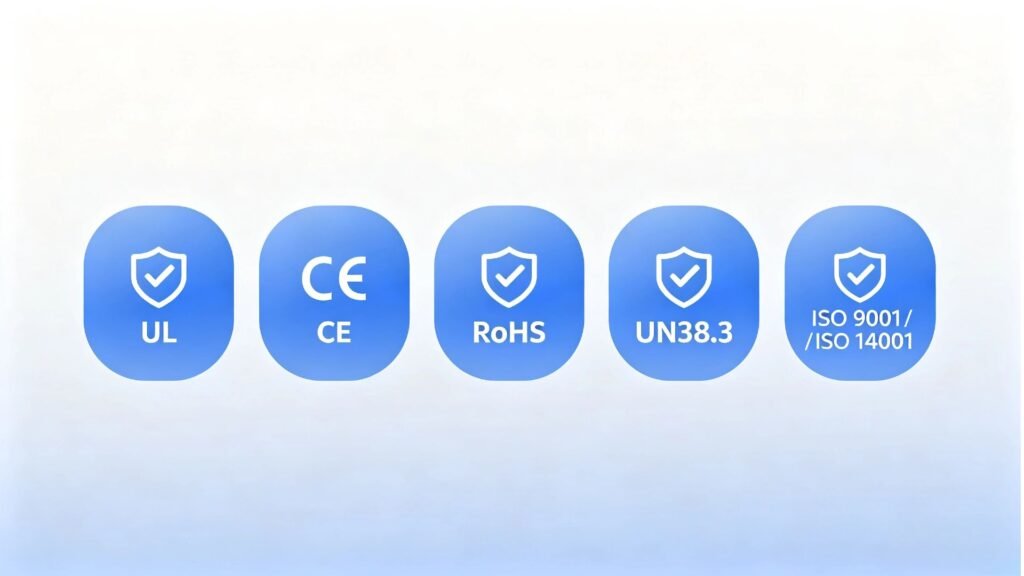
For B2B buyers, lithium battery safety is about regulatory compliance. Before selecting a supplier, verify these critical certifications:
| Certification | Requirement | Why It Matters |
|---|---|---|
| UN38.3 | Mandatory for air/sea transport of lithium batteries | Required for shipping; without it, freight forwarders will refuse your cargo. |
| UL 1642 / UL 2054 | Safety standard for lithium cells and packs | Ensures the battery has passed rigorous electrical, mechanical, and fire tests. |
| CE | Mandatory for products sold in EU | Indicates compliance with EU safety, health, and environmental requirements. |
| RoHS | Restriction of hazardous substances | Required for EU market; also increasingly demanded in North America and Asia. |
| ISO9001 / ISO14001 | Quality and environmental management | Demonstrates that the supplier operates consistent manufacturing processes. |
At A&S Power, every shipment includes full compliance documentation – test reports, certificates, and material declarations. We also equip every custom cell with built-in overcharge, over-discharge, and temperature protection as standard features, not optional add-ons.
Custom Battery Solutions: What We Offer
A&S Power specializes in custom Li-Polymer and Li-Ion battery solutions for B2B clients. Our capabilities include:
-
Custom dimensions and shapes – from 3mm thin pouch cells to large-format prismatic packs.
-
Voltage and capacity customization – 3.7V, 7.4V, 12V, 24V, and beyond.
-
BMS integration – smart battery management systems with communication protocols (I²C, SMBus, CAN, etc.).
-
Labeling and packaging – OEM branding, custom wrappers, and retail-ready packaging.
-
End-to-end quality control – incoming material inspection, in-process testing, and 100% final functional testing.
We’ve served clients in medical devices, wearable technology, IoT sensors, portable audio, and industrial equipment for over a decade. Our engineering team provides direct technical support throughout your product development cycle.
Partner with a Certified Lithium-Ion Battery Manufacturer
At A&S Power, we deliver custom Li-Ion and Li-Polymer battery solutions for OEM buyers across industries. Whether you need a standard 18650 pack or a complex multi-cell assembly, we provide:
-
✅ Full compliance documentation (UN38.3, UL, CE, RoHS)
-
✅ Custom engineering support
-
✅ Reliable supply chain with consistent quality
-
✅ Competitive pricing for bulk orders
📄 Request a Technical Datasheet
📞 Contact Our Engineering Team
🔗 View Our Custom Battery Solutions
We provide full technical documentation and compliance certification with every order – so you can focus on your product, not regulatory paperwork.
Dongguan A&S Power Technology Co., Limited.
Building 1, No. 2, Keji 9th Road, Songshan Lake, Dongguan, Guangdong, China
📞 +86 137 1383 1631 | ✉ info@enerbe.net