
18650 Battery: The Complete Guide to Voltage, Capacity & Safety
Published by A&S Power | Battery Technology
Introduction
If you’ve ever used a flashlight, vape, or portable electronics, you’ve probably come across an 18650 battery. But what exactly is it, and why is it so popular?
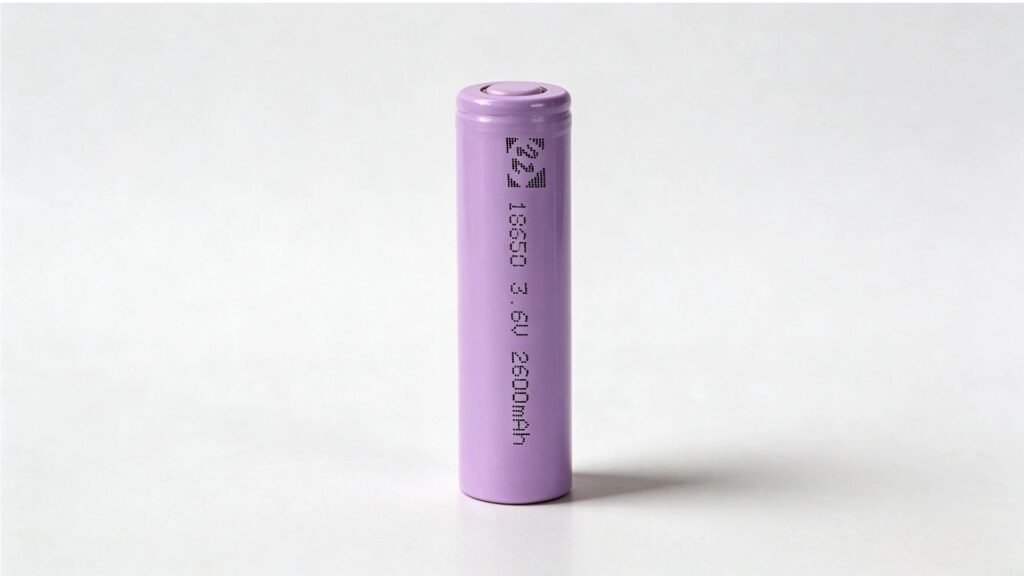
The 18650 battery is a cylindrical lithium-ion rechargeable battery named for its dimensions – 18mm in diameter and 65.0mm in length. It’s one of the most widely used battery formats in the world, powering everything from flashlights and laptops to electric vehicles and power tools.
This guide covers everything you need to know about 18650 batteries – from voltage and capacity to sizes, safety, and common applications.
What is an 18650 Battery?
The 18650 battery is a lithium-ion rechargeable cell that has become the industry standard for many portable devices. Its name comes from its physical dimensions:
| Measurement | Size |
|---|---|
| Diameter | 18mm |
| Length | 65mm |
| Shape | Cylindrical |
| Weight | 45–50g (typical) |
Key characteristics:
- Rechargeable – can be recharged hundreds of times
- High energy density – more power in a compact size
- Wide operating voltage – 3.6V to 4.2V
- Versatile – used in many different devices
18650 Battery Voltage Guide
| State | Voltage | Explanation |
|---|---|---|
| Nominal Voltage | 3.6V – 3.7V | Standard operating voltage |
| Fully Charged | 4.2V | Maximum voltage – stop charging at this level |
| Cutoff Voltage | 2.5V – 3.0V | Minimum voltage – don’t discharge below this |
Important: Always use a compatible 18650 battery with the correct voltage for your device. Using the wrong voltage can damage your device or create safety risks.
Common 18650 Battery Sizes and Capacities
| Capacity | Typical Applications | Runtime |
|---|---|---|
| 1,800–2,000mAh | Basic flashlights, small devices | Short runtime |
| 2,000–2,600mAh | Flashlights, vapes, portable fans | Medium runtime |
| 2,600–3,500mAh | Laptops, power tools, high-end flashlights | Long runtime |
| 3,500–5,000mAh+ | E-bikes, electric vehicles, high-capacity devices | Extended runtime |
The capacity you need depends on your device’s power consumption and how long you want it to run. Higher capacity batteries are typically larger and heavier, but not all devices can accommodate the extra size.
18650 Battery vs AA – What’s the Difference?
| Feature | 18650 Battery | AA Battery |
|---|---|---|
| Type | Rechargeable lithium-ion | Alkaline (disposable) or NiMH (rechargeable) |
| Voltage | 3.6V – 3.7V | 1.5V (alkaline) or 1.2V (NiMH) |
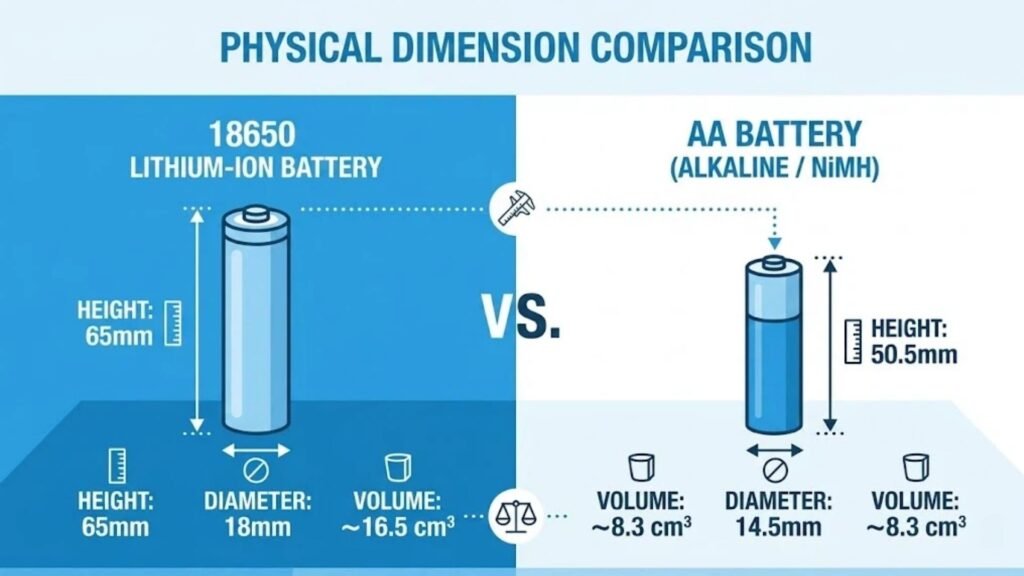
| Size | 18mm × 65mm | 14mm × 50mm |
| Rechargeable | Yes | Alkaline: No; NiMH: Yes |
| Capacity | 1,800 – 5,000mAh | 1,800 – 2,800mAh (NiMH) |
| Energy Density | Very high | Lower |
| Best for | High-drain devices | Low-drain devices |
18650 batteries deliver more power and longer runtime than standard AA batteries, making them ideal for high-drain devices like flashlights, power tools, and vapes.
Common Applications for 18650 Batteries
| Application | Why 18650 |
|---|---|
| Flashlights | High energy density for long runtime |
| Vapes and E-cigarettes | High discharge rate for consistent vapor |
| Laptops | Reliable power for extended use |
| Power Tools | High current output for demanding applications |
| E-bikes | Multiple cells in series for higher voltage |
| DIY Projects | Versatile and widely available |
| Portable Power Banks | High capacity in a compact size |
How to Choose the Right 18650 Battery
1. Choose the right capacity
Higher mAh = longer runtime. For flashlights, 2,000–3,000mAh is sufficient. For high-drain devices, choose higher capacity (3,000–3,500mAh).
2. Check the discharge rate (C-rating)
- Low discharge: 1C–5C – suitable for flashlights, portable fans
- Medium discharge: 5C–10C – suitable for vapes, power tools
- High discharge: 10C–20C+ – suitable for high-performance devices
3. Choose the right form factor
- Protected cells: Built-in safety circuit – safer but slightly longer (65–70mm)
- Unprotected cells: No safety circuit – shorter (65mm) but less safe
4. Choose the right brand
Stick with reputable brands and avoid cheap knockoffs that may be mislabeled or unsafe.
How to Charge an 18650 Battery Safely
What you need:
- 18650 battery charger (supports lithium-ion)
- Correct voltage setting (4.2V)
- Fire-safe charging bag (recommended)
Step-by-step:
- Insert the battery into the charger with correct polarity (+ and -)
- Set the charger to 4.2V (if adjustable)
- Start charging and monitor the process
- Remove when fully charged – do not overcharge
⚠️ Safety tips:
- Never leave batteries charging unattended
- Use a fire-safe bag for added protection
- Don’t use damaged or swollen batteries
- Store at 40–60% charge when not in use
Frequently Asked Questions
1. How long does an 18650 battery last?
Under normal use, an 18650 battery lasts 300–500 charge cycles (2–3 years of regular use).
2. Are all 18650 batteries the same?
No. Different 18650 batteries have different capacities, discharge rates, and safety features. Always choose one that matches your device specifications.
3. Can I use an 18650 battery in a flashlight?
Yes, if the flashlight is designed for 18650 batteries. Check your flashlight’s specifications before use.
4. How do I dispose of an old 18650 battery?
Do not dispose of lithium-ion batteries in regular trash. Take them to a designated battery recycling center.
5. What is the difference between protected and unprotected 18650 batteries?
Protected batteries include a built-in safety circuit to prevent overcharge, over-discharge, and short circuits. Unprotected batteries lack this safety feature.
Custom 18650 Battery Solutions from A&S Power
At A&S Power, we manufacture custom 18650 battery packs for OEM buyers across multiple industries. From portable devices and power tools to medical equipment and DIY projects, we deliver tailored solutions with safety and performance in mind.
- ✅ Custom 18650 battery packs
- ✅ UL, CE, RoHS, and UN38.3 certification
- ✅ OEM labeling and packaging
- ✅ Engineering support from concept to production